
UBER TRADE ANALYSIS
I will begin with the sources I pulled for context.
First an informative short video from Mango Research: https://www.youtube.com/watch?v=wDgCNCd7KzY
Second a long-form documentary from ABC, an Australian public broadcast service: https://www.youtube.com/watch?v=NiWZjN0B0h0
Third a interview of the current CEO of Uber by Ben Thompson of Strattechery: https://stratechery.com/2025/an-interview-with-uber-ceo-dara-khosrowshahi-about-aggregation-and-autonomy/
I encourage you to parse through these in your own time. If only one, the short video from Mango Research is packed with healthy tidbits hard to find elsewhere.
CONTEXT
Uber is a company born from convenience and nurtured with spite, lock this in your head. Why does any of this context matter?
In a sentence: Uber comes from money and does not play about money.
Garrett Camp was co-founder of StumbleUpon. I had to Google this company and it turns out it’s one of those early dot com novelties that made a shit-ton of money before disappearing into nothingness. All StumbleUpon did was open a semi-random website or video that matched the user's interests. Like a caveman Tik-Tok; in the early days of the internet that was a big thing. The extension drove more traffic to webpages than any other social media site in the US including Facebook and etc. Camp sold StumbleUpon to eBay for $75 million in 2007.
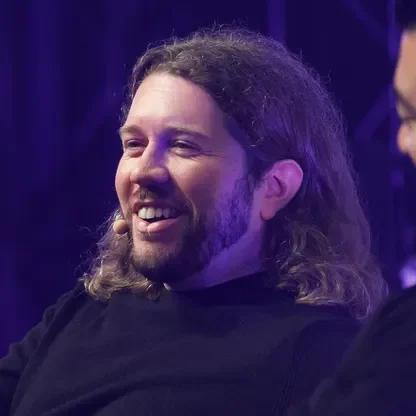
Garret Camp
Travis Kalanick had dropped out of UCLA to found Scour and later co-founded Red Swoosh. Kalanick had a history of playing toxic. Scour had collapsed under the legal pressure of a $250 billion copyright infringement lawsuit from over 30 media companies in 2000. 2001 Kalanick launched Red Swoosh with former Scour member Michael Todd, describing it as his "revenge business". By 2002 only two people remained, Kalanick and engineer Evan Tsang, after months without paychecks. Without a $1.8 million bailout in 2005 from Mark Cuban and moving the software team to Thailand to reduce costs the story might have ended there. Instead in 2007 Kalanick sold Red Swosh to Akamai for $19 million.
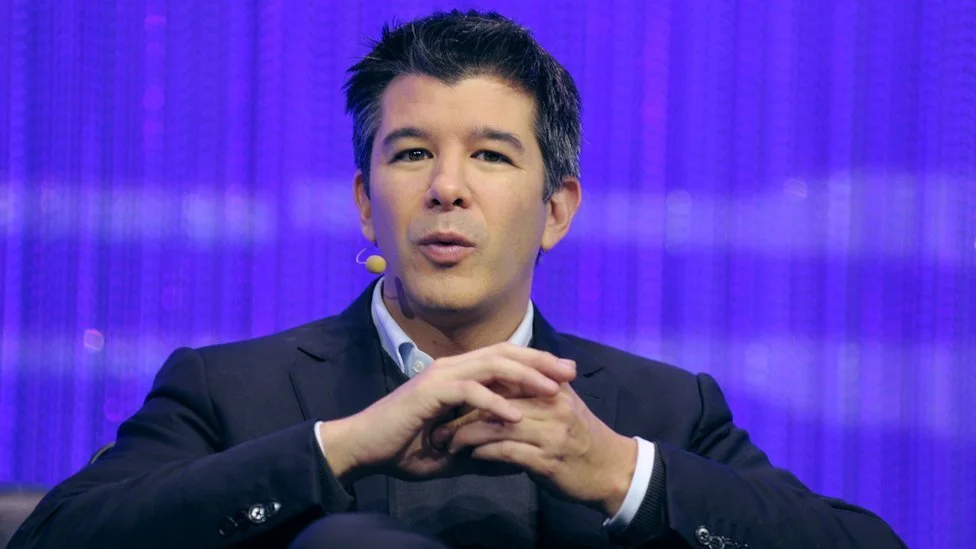
Travis Kalanick
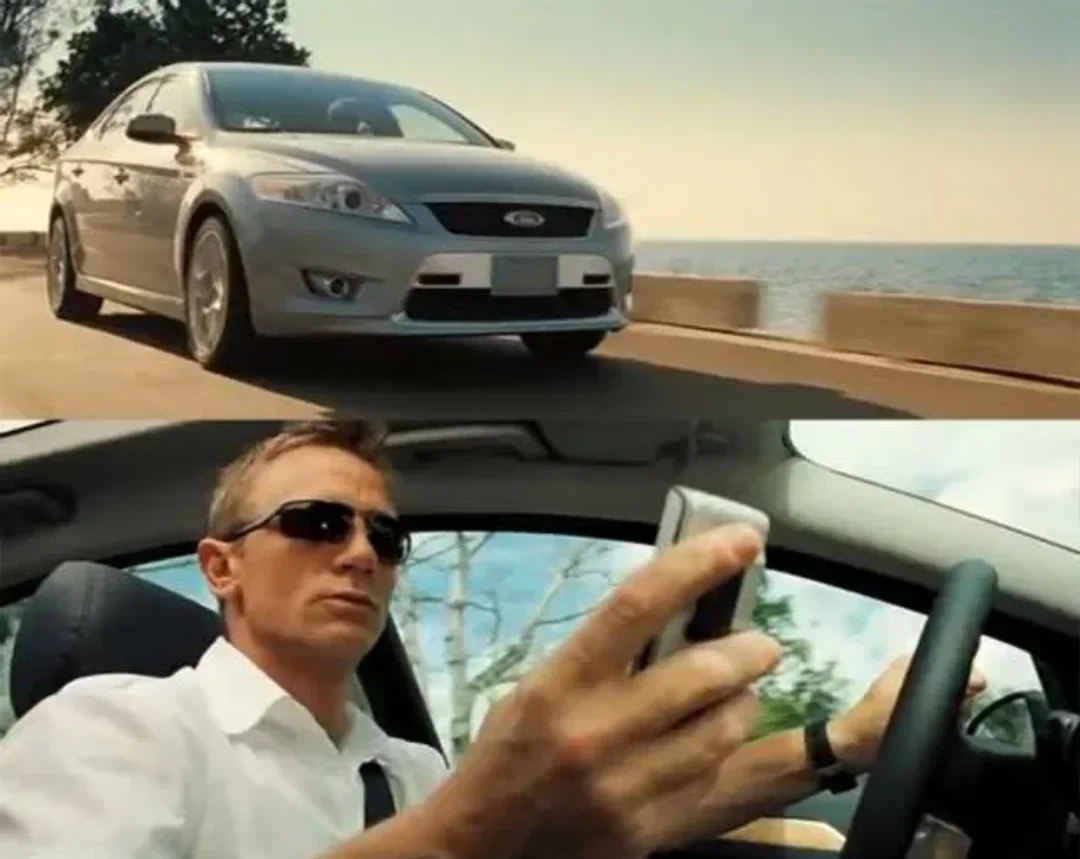
The core-idea for Uber was conceived in 2008 while attending the LeWeb conference in Paris; Camp was watching Casino Royale when he noticed James Bond use a cell phone to track the location of a car. After a night out drinking Kalanick and Camp were being dicks in the back of a cab. The cabbie, understandably, threatened to kick them out. Incensed by the perceived disrespect Kalanick voluntarily got out of the cab and was converted to the ruthless co-founder we know today. Camp conceptualized Uber and led the initial prototype development registering the domain ubercab.com in August 2008 and by November 2008 registering UberCab as an LLC in California. In 2009 two of Camp’s graduate school engineer friends, Oscar Salazar and Conrad Whelan, built the first working prototype of Uber. This version was literally only text and GPS. On July 5, 2010, Uber officially launched in San Francisco. Six months in, the California Public Utilities Commission and the San Francisco Municipal Transportation Agency issued a cease-and-desist, objecting to UberCab on the grounds that it operated as an unlicensed taxi service. Instead of you know ceasing and desisting this is where Kalanick decided to shine. UberCab rebranded to "Uber Technologies, Inc."—a shift in narrative, repositioning the company as a technology platform rather than a taxi service evading the law. Another key Kalanick contribution was the idea of a distributed network of drivers vs. the luxury fleet of cars Camp initially envisioned. Cutting bloat, costs, and almost single-handedly creating the gig-economy. This attitude of steamrolling through opposition has matured and changed alongside the growth of the company. Currently Dara Khosrowshahi serves as CEO of Uber, Kalanick sold most his shares after resignation in 2017, and Camp sits as a board observer. I could go on about this for pages but this is a trade analysis not Uber history paper.
Uber IPO’d May 2019. Three things you should note about the company pre-IPO:
- From 2012 the company has been plagued by scandals from surge pricing to sexual misconduct, Uber’s reputation was and still is less than stellar.
- June 2017 40% of Uber's voting shares forced an immediate resignation; Kalanick resigned as CEO after being sued by Benchmark Capital. Expedia CEO Dara Khosrowshahi was named his replacement.
- Uber had raised $24.7 billion as a private company from 166 different investors over its nine-year history from 2009 to 2019. Which sounds great until you realize the company was burning through money with no profit.
Uber Technologies priced shares at $45 on the New York Stock Exchange (NYSE) under the ticker "UBER”, raising $8.1 billion and valuing the company at approximately $82.4 billion. The stock dropped over 7% the first day resulting in a $617 million immediate loss for investors who purchased shares at the IPO price, marking the largest first-day dollar loss in U.S. IPO history. It took until 2023 to become profitable after six years of consecutive losses; Uber reported its first annual net income of $2.18 billion.
Currently the price of Uber is $86 (Jan 26’). Analysts rate Uber "Strong Buy" with an average 12-month price target of $109.09, about 25% up from current prices. Let’s see how the bots feel about that.
TRADE
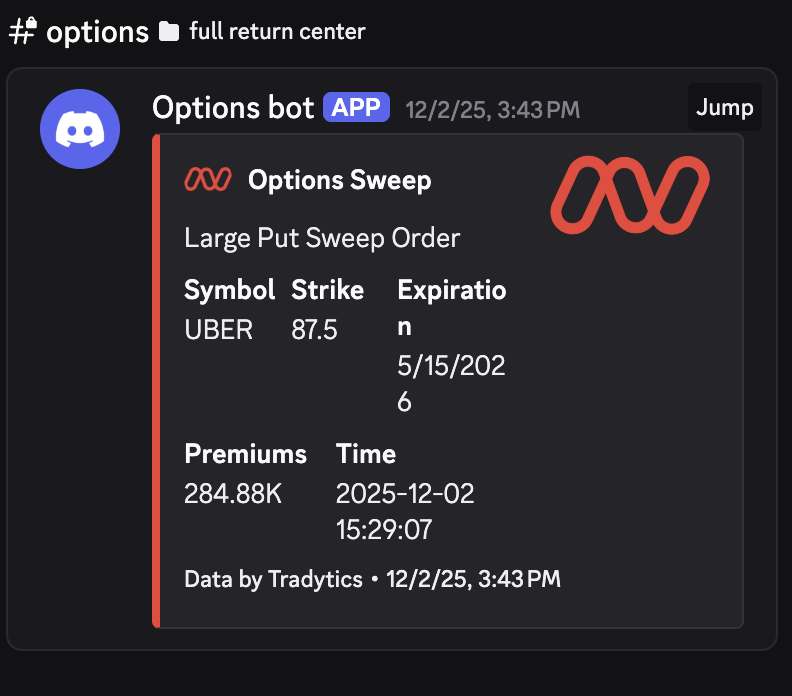
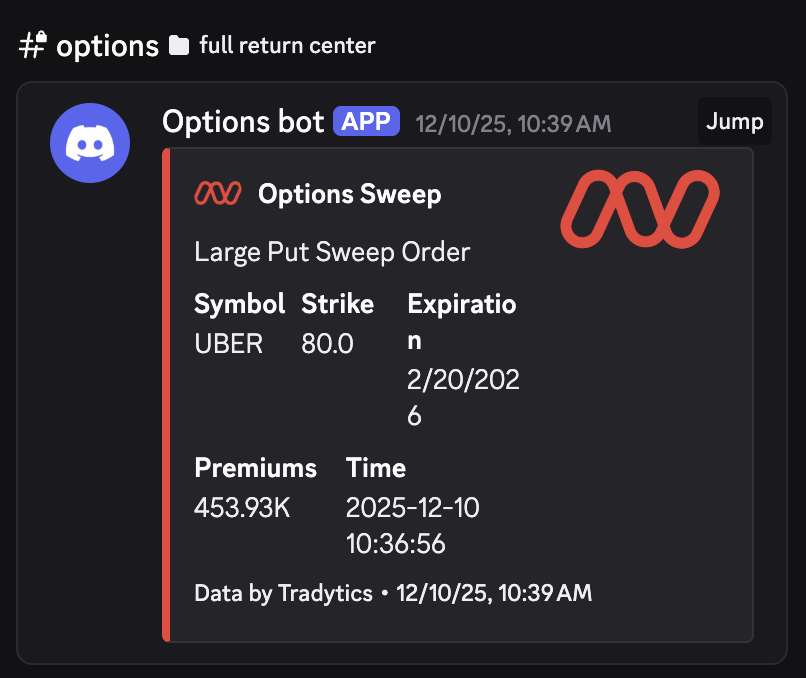
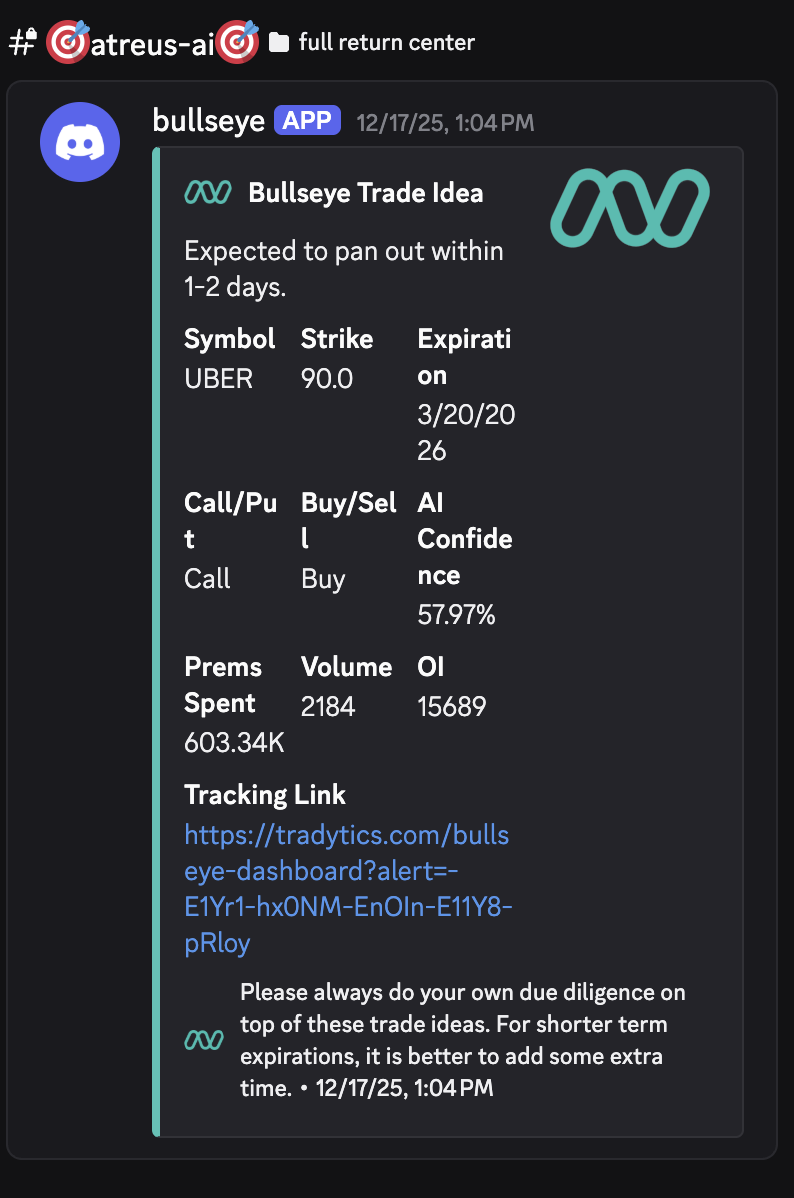
First a look at the FRC bots. We use the bots to capture a snapshot of the market; instead of hunting around searching for a place to put our money we take a look at where people have already invested and see if it works for us. With any contract inspect and notate: relevant strike prices, expiration date on contracts, and volume. Volume is a necessity, with no-one to sell to your contract is dead in the water.
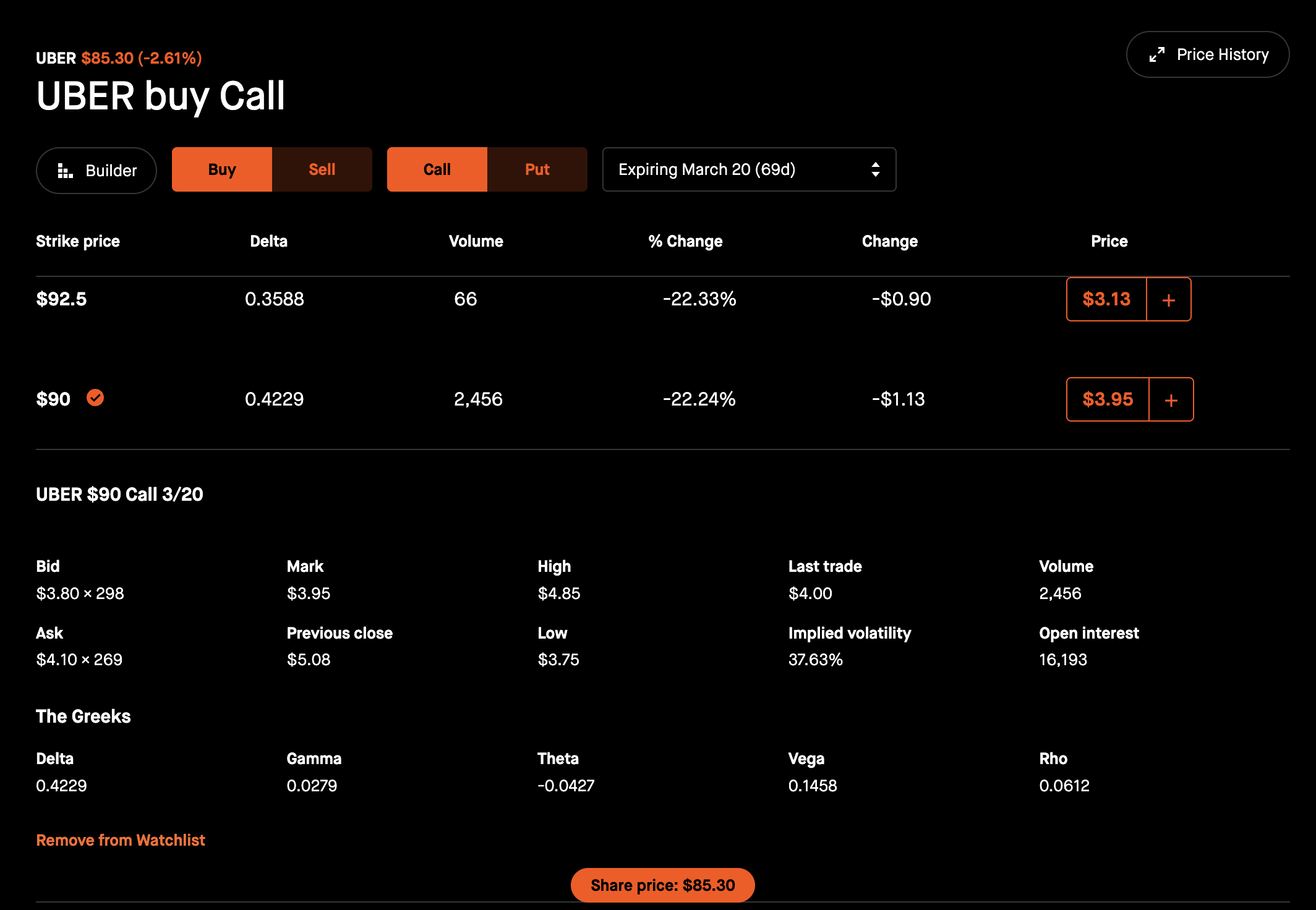
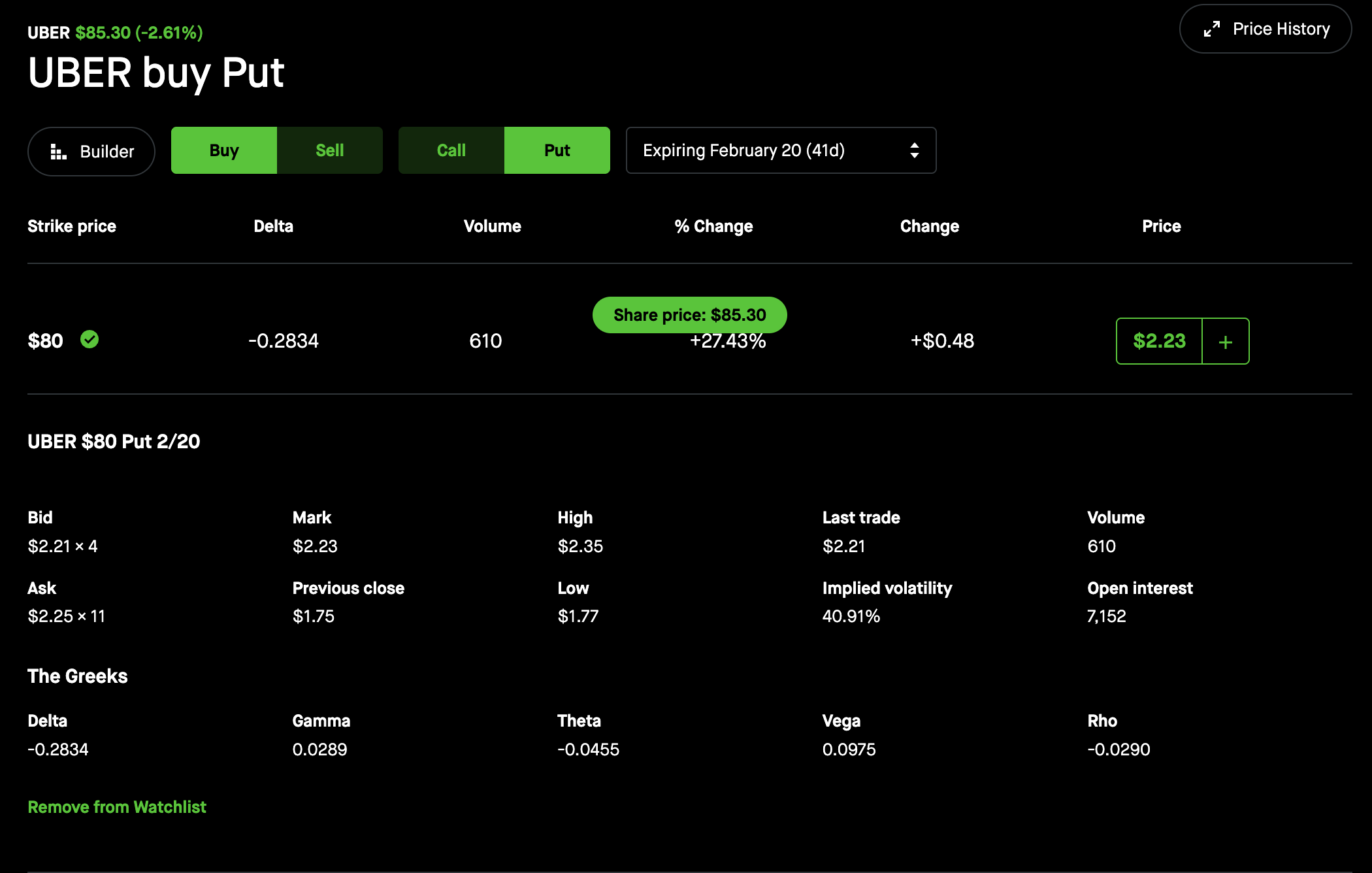
Highlighting the contracts we obtained from the bots we inspect and notate: delta, theta, and open interest. Delta is $ you make per $1 move on the ticker. Theta is $ you lose to time cost. The optimal trade has a low theta and high delta. When contract shopping I like to allow space for multiple contracts, if your budget doesn’t allow it, seek another trade. Never feel obligated to force a trade; the goal isn’t rich quick, it’s rich period. Overtrading will kill that dream.
THIS IS THE MOST IMPORTANT PART!
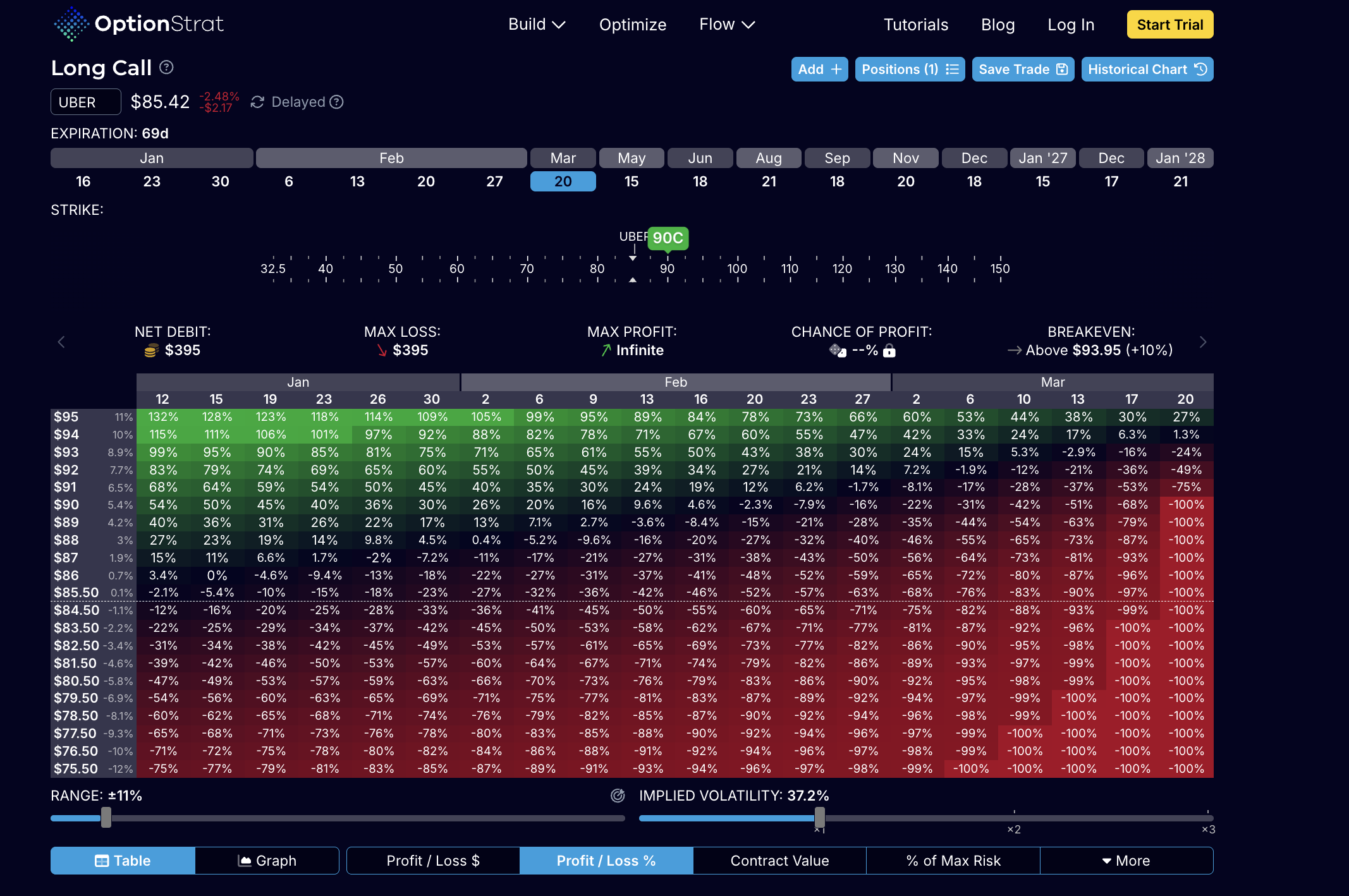
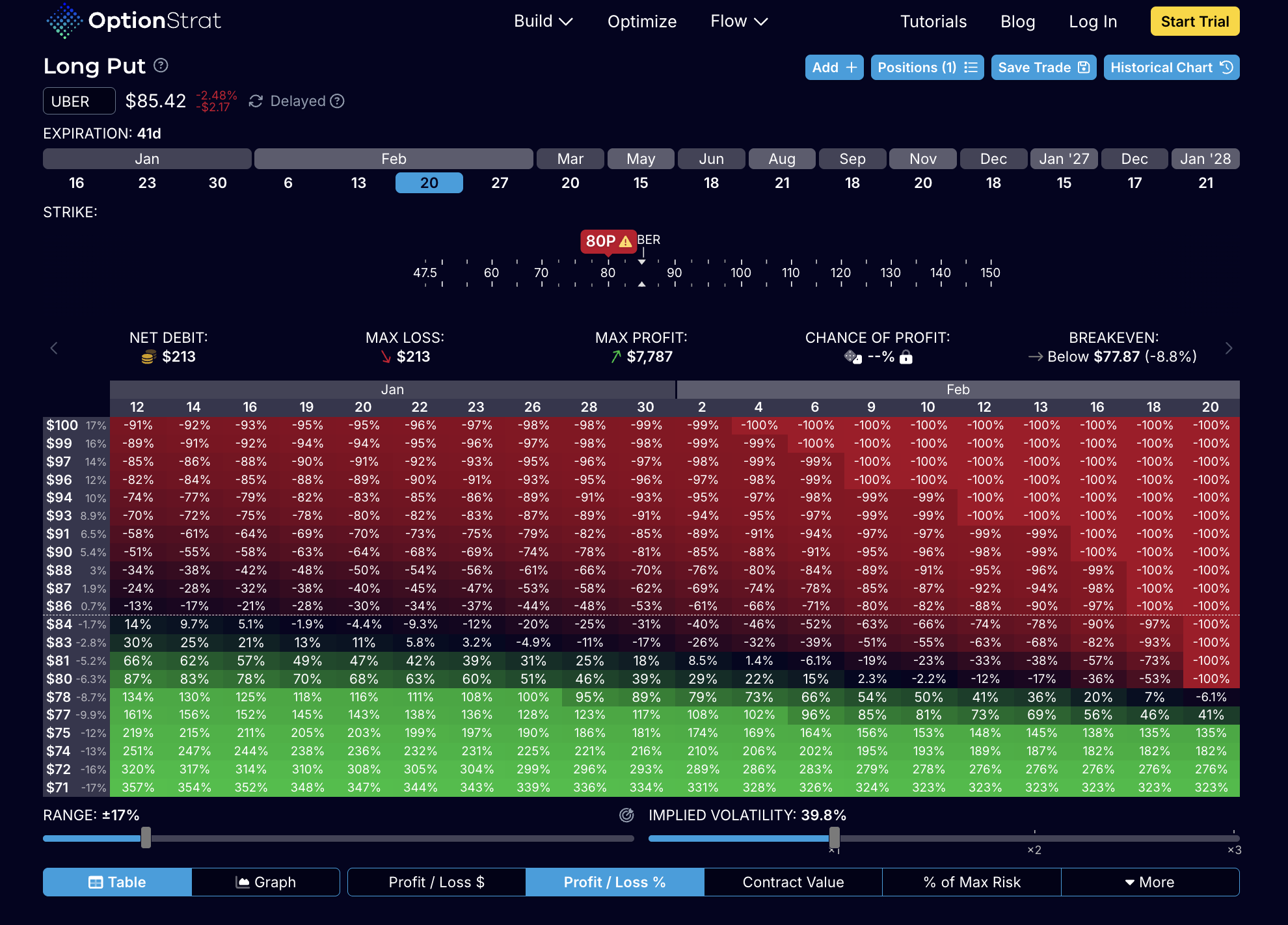
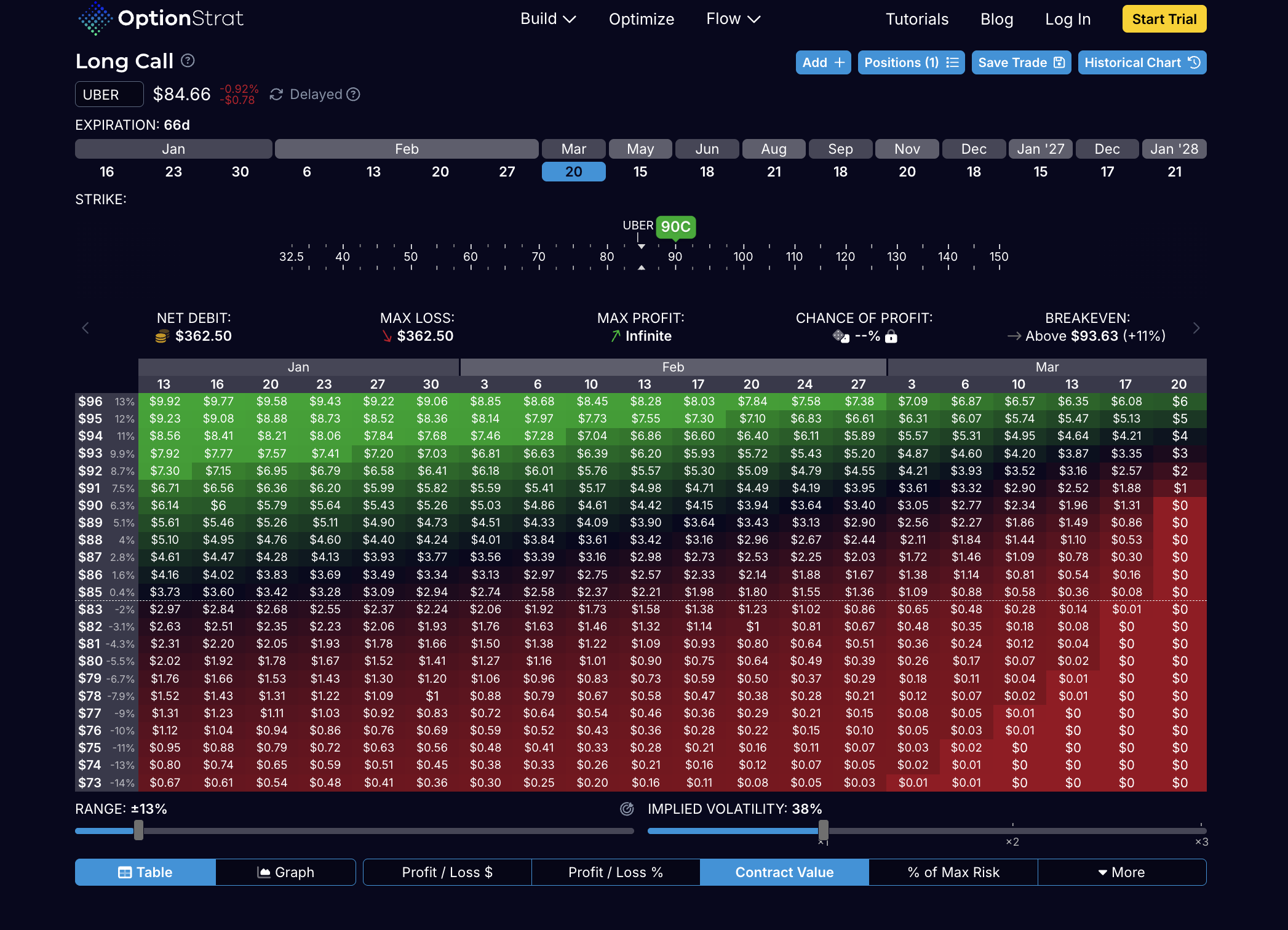
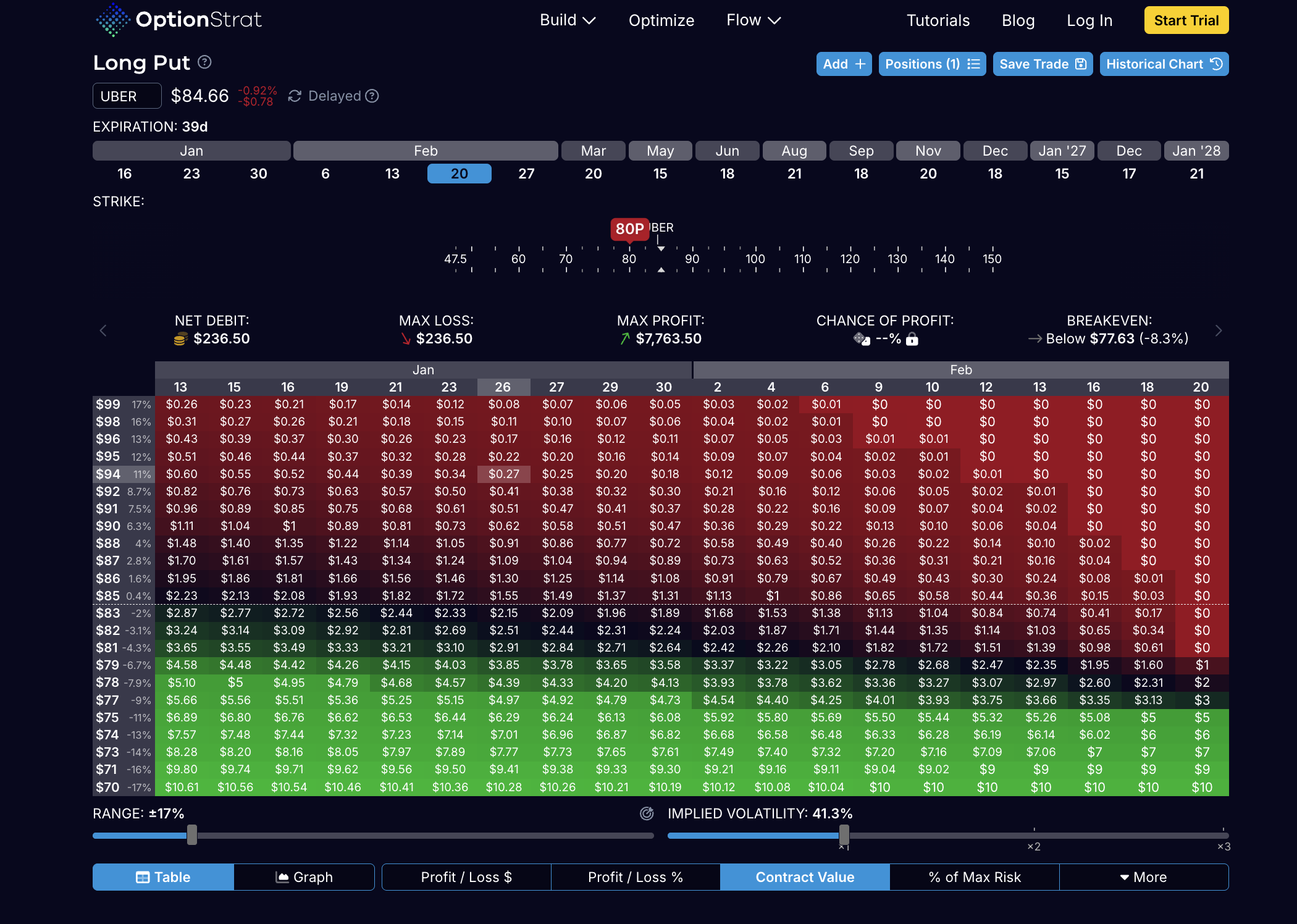
RISK. Aka how much am I willing to lose before this becomes a problem. Defining and setting your limits well before you place your trade will save you a world of hurt. It’s not about winning its about staying alive to trade another day. I like to use OptionStrat to visualize my trade; in the red zone the trade is chopped so it’s better to exit before then.
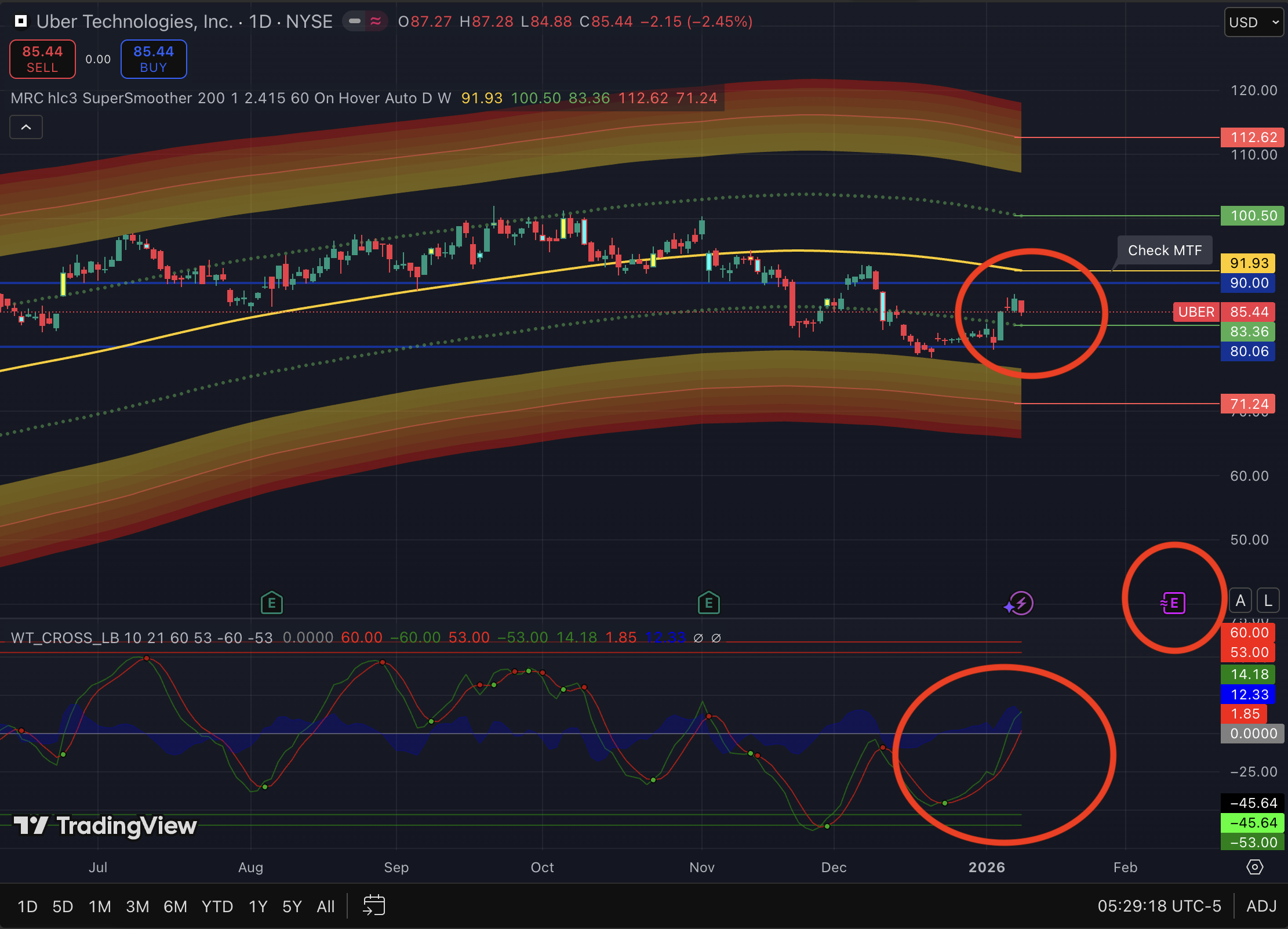
I will direct your eyes to the three circles in vertical order. 1. The first circle highlights the two blue lines that designate our price targets. ($90 & $80) 2. The second circle highlights that earnings are upcoming. (earnings tend to be volatile) 3. The third circle highlights an indicator signaling an upcoming reversal. (i suggest you play around with your chart and find some indicators that plug into your flow)
THOUGHTS
I write these to slow me down. To think through my trade. Uber is one of those companies who has infiltrated my life so much I had to get my lick back. If I told you how much I spend on UberEats you would laugh but I know my personal addiction isn’t unique because it’s reflected in the stock prices. I really do believe UberEats is what made Uber a profitable company, how many companies can actually attribute their viral growth to the pandemic?? Personal usage aside Uber is embedded into our cultural lexicon; we use the product itself as a verb like Google or Jacuzzi. It’s difficult to imagine a world post-Uber especially when the company continues to integrate itself in everything from courier services to rental cars. While Uber may not officially still have a Threat Operations division staffed by ex-CIA the company is still as cutthroat under Khosrowshahi as ever.
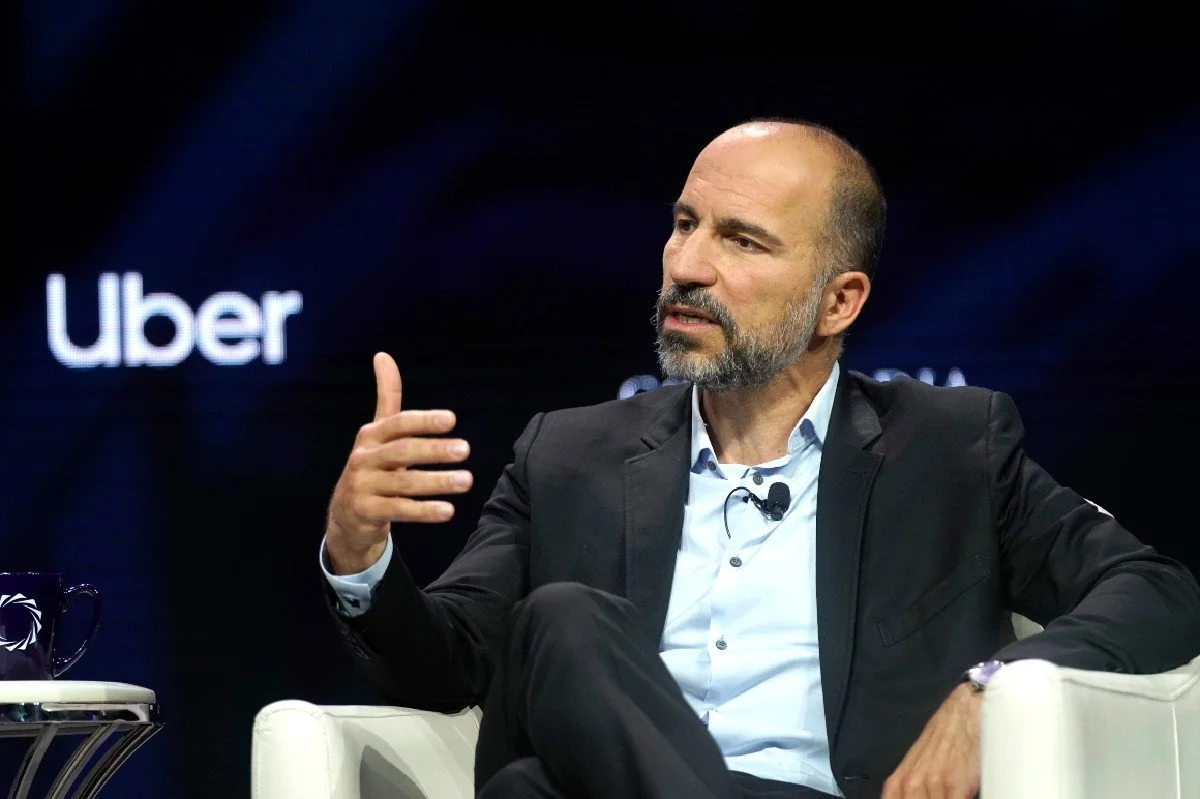
Dara Khosrowshahi
Uber banks on the distributed transportation data network; it operates in 70 countries with over 50% of bookings outside of America. Uber's stated mission is to create opportunity through movement and they are a global leader in two industries: ridesharing and food delivery.With Uber’s current dominance in the AV vehicle space (locking in an early collaboration with Waymo) I’m looking forward to seeing how the chip wars impact the company.
Thank you for reading this article of an analysis.
After notating all relevant information in your trading journal, roll the dice! Purchase what fits your appetite and anticipate a Full Return. :)